
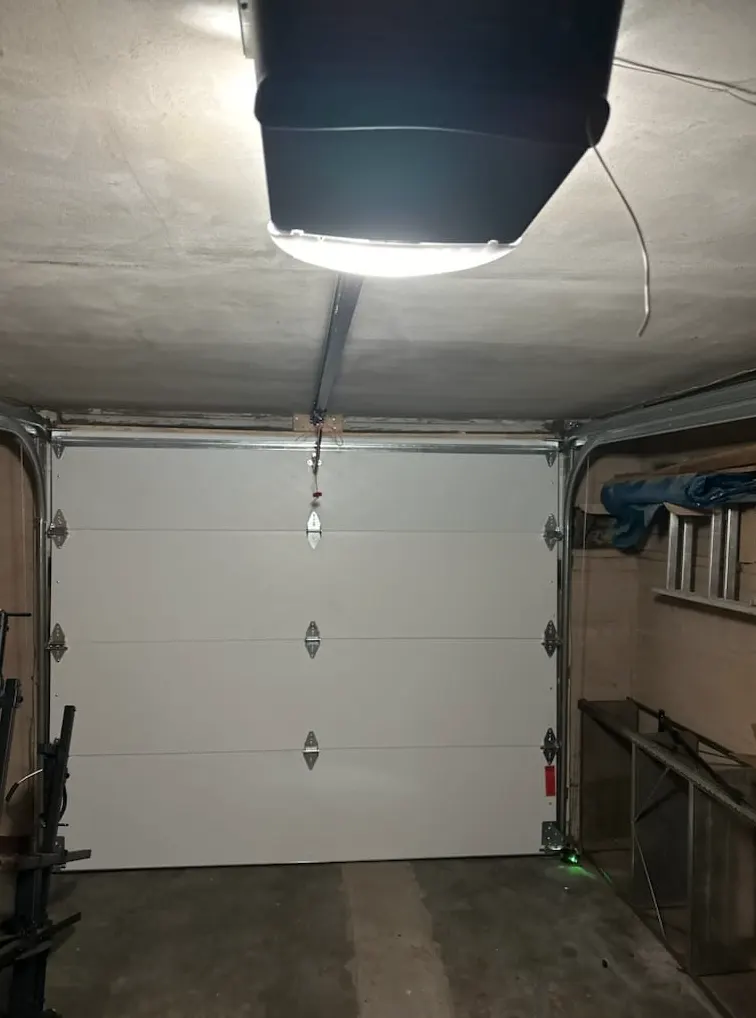
Most loud garage door openers can be quieted with lubrication and tightened hardware, but grinding, slamming, or popping noises usually mean a part is failing, not just noisy. If your door sounds worse after a round of humid weather or a string of afternoon downpours, that's not a coincidence — moisture works into hinges, rollers, and chain links and turns a minor squeak into a real mechanical problem. Here's how to work through it in order, cheapest and safest fixes first.
Tools You'll Need
- Socket wrench set and a ratchet
- Silicone-based garage door lubricant (not WD-40, which attracts dust and grit)
- Rags and a stiff brush
- Flashlight
- Stepladder
- Replacement nylon rollers (if needed)
- Rubber isolation pads or anti-vibration kit (if needed)
Step 1: Figure Out What Kind of Noise You're Hearing
Before you touch anything, run the door up and down once or twice and listen. A rattling, metallic shaking usually points to loose hardware. A grinding or scraping sound points to worn rollers or a dry track. A loud bang at the top or bottom of travel can mean the door is slamming into its stops. A rhythmic clanking that matches the chain's movement often means the chain is loose or the opener rail needs lubrication. Knowing which one you've got saves you from lubricating a problem that's actually a loose bolt.
Step 2: Tighten Every Bolt You Can Reach
Garage doors shake every time they run, and in a climate with frequent storms and wind, that vibration is more constant than in drier regions. Over months, nuts and bolts on the track brackets, hinges, and the opener's mounting bracket work loose. With the door closed, go hinge by hinge and bracket by bracket with a socket wrench, snugging anything that turns. Don't overtighten into stripped wood or drywall — snug is the goal, not maximum torque.
Step 3: Lubricate the Moving Parts
Apply silicone lubricant to the hinges, rollers (the parts that spin, not the stems), the opener's chain or screw rail, and the springs. Wipe away old grease and grit first with a rag, since humidity and dust tend to cake onto hardware here and turn into a gritty paste that grinds instead of glides. Avoid spraying lubricant on the track itself — that's for the rollers, not the rail surface. This step alone fixes a surprising number of squeaky, scraping doors.
Step 4: Inspect and Replace Worn Rollers
Metal rollers are the loudest option on any garage door, and in a humid climate they're also the first to rust and seize. If yours are metal, flat-spotted, or wobbling in their brackets, swap them for nylon rollers — they run noticeably quieter and don't corrode the way steel rollers do near coastal air. Replacing rollers means removing the roller brackets one at a time while the door is supported, which is a reasonable DIY job on a door with torsion springs already in good condition, but stop and call a technician if you're not confident supporting the door safely while a bracket is off.
Step 5: Check Chain or Screw Drive Tension
A loose chain slaps against the rail every time the door moves. Most chain-drive openers have a tensioning nut near the opener head; the manual will show the correct amount of sag (usually around a half-inch). Adjust it a quarter-turn at a time and test the door — overtightening puts strain on the motor and the rail. If your opener uses a screw drive, check that the rail is lubricated with the grease made for that specific mechanism, not an all-purpose spray.
Step 6: Add Vibration Isolation
Even a well-tuned chain-drive opener transmits vibration into the ceiling joists, which is often what makes it sound louder inside the house than it actually is. A rubber isolation kit between the opener's mounting bracket and the joist absorbs a lot of that transmitted noise for a modest cost and about twenty minutes of work.
Step 7: When Noise Means It's Time for a Belt-Drive Swap
If you've tightened, lubricated, replaced rollers, and adjusted tension and the door is still loud, the opener mechanism itself may be the problem. Chain-drive openers are inherently noisier than belt-drive units, which use a rubber-reinforced belt instead of metal links. A belt drive runs quieter from day one and doesn't develop the same clanking as it ages. Swapping from chain to belt means replacing the opener head and rail as a set, matching it to your door's weight and horsepower needs — this is a job for a technician, both for safe spring and cable handling during removal and for correctly setting the new unit's force and travel limits.
What's DIY and What Isn't
Tightening hardware, lubricating hinges and rollers, cleaning tracks, and adding isolation pads are all reasonable homeowner tasks with basic tools. Replacing rollers is doable with care. Anything involving the torsion springs, cables, or a full opener swap should go to a technician — those parts are under heavy tension and handling them without the right equipment is how people get hurt.
When to Call Eagle Lake Overhead Door Co
If you've worked through the steps above and the door is still noisy, or if you hear grinding that doesn't go away with lubrication, it's worth having it looked at before storm season puts extra strain on a door that's already working harder than it should. Our Preventive Maintenance visits catch worn rollers, loose hardware, and rust before they turn into a stuck or off-track door, and if a chain-drive opener has run its course, our Garage Door Opener Installation service can get you set up with a quieter belt-drive system sized correctly for your door.
If your garage door in Eagle Lake, FL is louder than it used to be, give Eagle Lake Overhead Door Co a call — we'll track down the real cause and fix it right the first time.